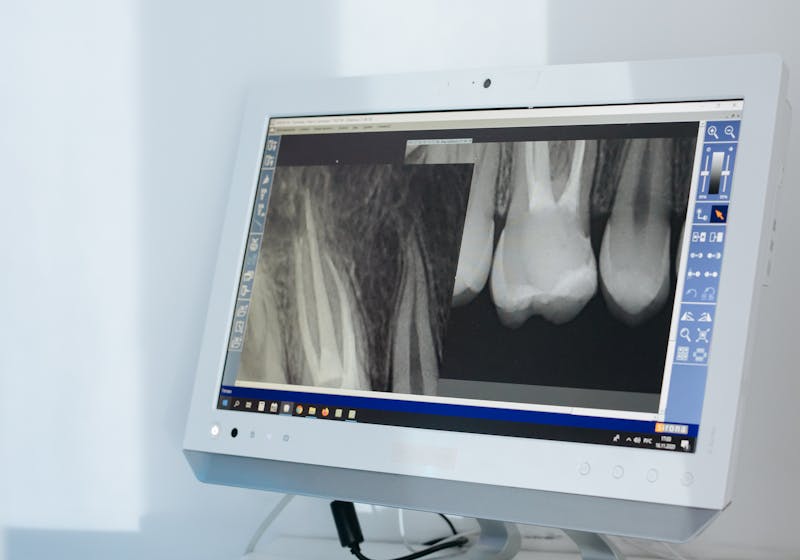
When a tooth is badly damaged or its inner tissue is inflamed or infected, people often ask whether it is better to save the tooth with root canal therapy or have it removed. There is no one answer: the appropriate option depends on the tooth, the surrounding tissues, your overall oral health, and your goals.
A dental examination and any clinically appropriate imaging help identify the source and extent of the problem. The dentists at Limegreen Dental are general practitioners. Limegreen Dental lists both root canal therapy and tooth extraction among its services.
What are root canal therapy and extraction?
Root canal therapy aims to keep a natural tooth when the pulp—the soft tissue inside the tooth—has been damaged, inflamed, or infected. The dentist removes the affected pulp, cleans and seals the inside of the tooth, and restores the tooth as needed. A crown may sometimes be considered when a tooth needs added protection after treatment, depending on how much healthy tooth structure remains.
An extraction removes the tooth from its socket. It may be considered when a tooth cannot be predictably restored, when damage extends too far below the gumline, or for other clinical reasons identified during an assessment. Removing a tooth creates a space, so it is also important to discuss whether replacement would be appropriate.
Learn more about Root Canal Therapy in Hamilton at Limegreen Dental.
Why saving a natural tooth may be considered
When a tooth can be restored, retaining it may help preserve normal chewing function and avoid a gap in the dental arch. It can also mean that a replacement option is not needed immediately. However, root canal therapy is not suitable for every tooth, and its likely prognosis depends on factors such as the amount of remaining tooth structure, the type and extent of a crack, gum and bone support, and whether the tooth can be restored.
Root canal therapy has potential benefits and limitations. It may allow a tooth to remain in place, but the tooth can still need a filling, crown, or other restoration, and future dental concerns remain possible. Your dentist can explain the findings that affect the expected outlook for your particular tooth.
When extraction may enter the discussion
Extraction may be discussed if a tooth is severely broken down, has a fracture that cannot be repaired, has inadequate support, or cannot be restored for another reason. In some circumstances, removing the tooth may be the more appropriate way to address the immediate dental problem.
Extraction also has trade-offs. Healing takes time, and an empty space can affect nearby teeth or chewing for some people. Depending on the location of the tooth and your circumstances, replacement choices may include a dental implant, bridge, or removable appliance. These options have different requirements, benefits, risks, timelines, and costs. A dentist can help you compare them after an assessment. Learn more about dental implants.
What factors guide the decision?
A careful decision is based on more than the level of pain. A dental assessment may consider the cause of the problem, the tooth’s restorability, cracks, root and bone condition, gum health, bite forces, the condition of nearby teeth, and your medical and dental history. Imaging may be clinically appropriate to evaluate areas that cannot be seen directly.
Personal considerations matter as well. Ask about the anticipated treatment sequence, whether a final restoration or tooth replacement may be needed, expected healing, possible complications, costs, and how each option fits your oral-health goals. If you are weighing coverage, confirm your active plan details directly with your insurer or CDCP, as coverage, frequency limits, preauthorization requirements, co-payments, and additional charges can vary.
Questions to bring to your appointment
Useful questions include: Can this tooth be restored? What findings support root canal therapy or extraction? What restoration would the tooth need afterward? What are the possible risks and limitations of each choice? If the tooth is removed, do I need to replace it, and what are the options?
Do not ignore persistent tooth pain, facial swelling, a broken tooth, or a dental injury. These symptoms need timely professional assessment. For urgent dental concerns, see Limegreen Dental’s emergency dentist information. If you have already had an extraction, this guide on what to eat after a tooth extraction may help with general meal-planning questions during recovery.
Key takeaways
- Root canal therapy and extraction address different clinical situations; the appropriate choice depends on an individual assessment.
- When a tooth can be restored, root canal therapy may help retain the natural tooth, but it may require further restoration and is not suitable for every case.
- Extraction may be appropriate when a tooth cannot be predictably restored, but the resulting space may require discussion of replacement options.
- Ask about expected steps, risks, limitations, restoration or replacement needs, and plan coverage before deciding.
Related reading
- Dental Crown vs. Filling: How Is the Choice Made?
- What to Eat After a Tooth Extraction: A Day-by-Day Guide
Have questions about what applies to you?
A dental examination can help determine which options and timing are appropriate for your individual oral health needs.
Book an Appointment